
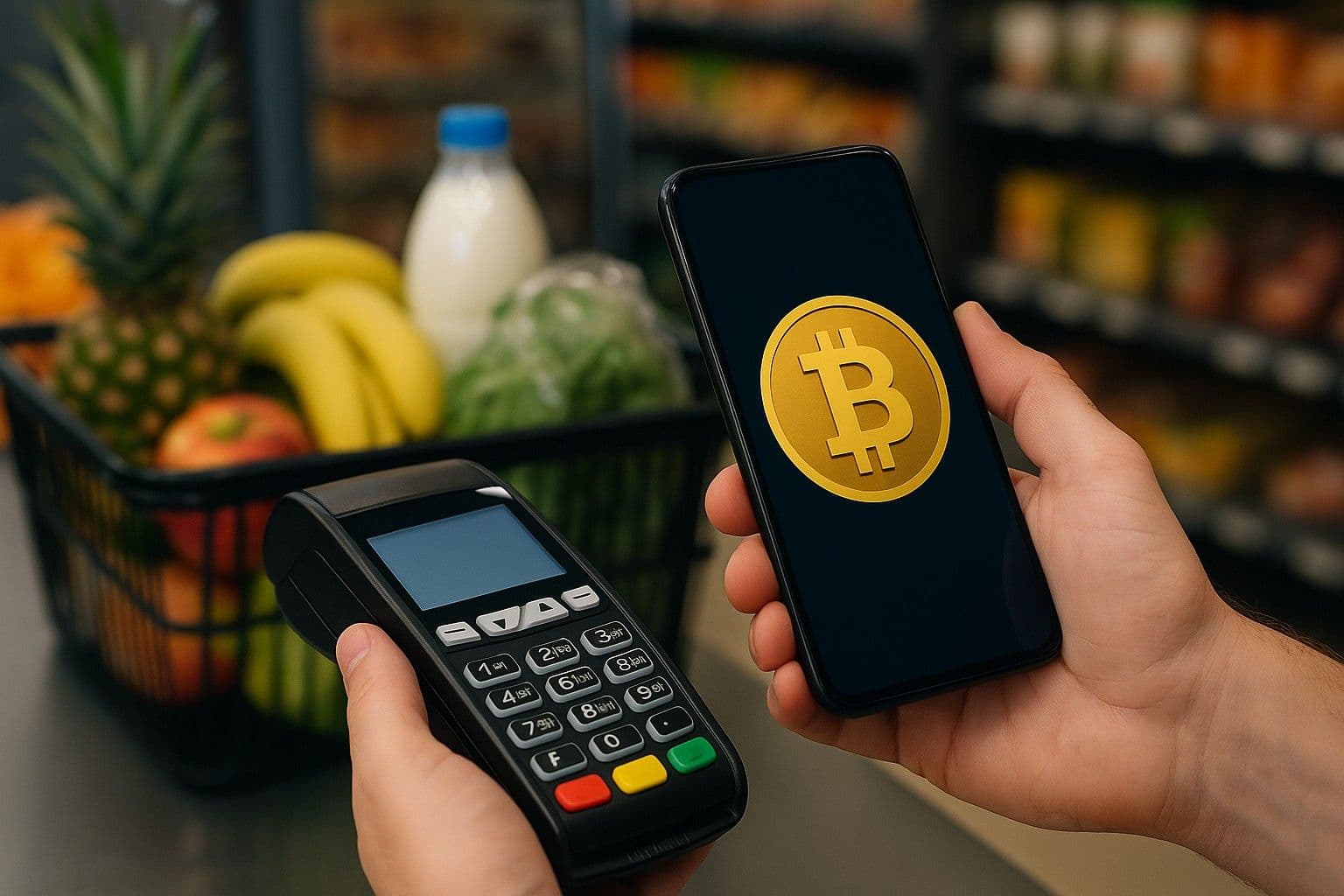
Cryptocurrency Is Starting to Act Like Real Consumer Money
For most of the past decade, cryptocurrency has been treated as a speculative asset. Its relevance was measured by price charts, trading volume and ETF narratives. That perception is now starting to shift. Cryptocurrency is being used quietly inside ordinary consumer spending flows, especially in groceries and everyday essentials.
This is not happening through dramatic checkout terminals or neon signs that say crypto accepted here. It is happening through more practical channels that require no disruption to existing retail infrastructure. Gift card rails funded with cryptocurrency, store balance reloading and crypto-denominated rewards programs are now the most common on-ramps. The customer sees familiar checkout flows. The retailer still receives fiat. Yet cryptocurrency is performing the actual economic function beneath the surface.
Retailers Are Participating Without Officially “Accepting Crypto”
Most large retailers are not adding native bitcoin or ethereum buttons to the payment terminal. Instead, they are quietly enabling third-party processors that instantly convert cryptocurrency to fiat before the payment is settled.
This indirect adoption currently appears in the form of
- digital gift cards purchasable with cryptocurrency
- reloadable store balances funded from crypto wallets
- loyalty rewards that can be claimed as bitcoin or stablecoins
- browser extensions that auto-convert crypto to fiat during checkout
For consumers who spend cryptocurrency on groceries through these systems, the process feels indirect but real. The spending outcome is identical to fiat. Crypto leaves the wallet and food is purchased.
Loyalty Rewards Are a Strategic Gateway
One of the most effective experiments in retail adoption has not been payments but rewards. When Safeway previously trialed bitcoin-based cashback, it did not advertise cryptocurrency as a tech innovation. It positioned it as a modern loyalty benefit.
A retail strategy executive involved in similar pilots described the reaction simply:
“Shoppers are not interested in crypto technology. They are interested in rewards that feel instantly valuable.”
This principle is why rewards programs are currently more scalable than direct payments. They introduce cryptocurrency as passive income rather than a learning barrier.
Why Cryptocurrency Is Not Fully Embedded Yet
The payment experience is still not seamless
Mainstream consumers will not adopt any system that introduces friction. Many current flows still require:
- purchasing a gift card
- loading a store wallet
- then completing the real checkout
Mass adoption requires identical ease to Apple Pay or Google Pay. That standard has not yet been met.
Volatility creates unacceptable business risk
Grocery and retail operate on razor-thin margins. A one percent asset fluctuation in minutes makes accounting unreliable.
Stablecoins offer a solution but global regulation is not yet synchronized.
Legal clarity is still evolving
Large retail chains will not act until cryptocurrency payments are not just tolerated but formally regulated. Legal certainty must exist before systems scale.
Consumer Perception Is Starting to Change
Even with imperfect infrastructure, a key psychological turning point is emerging. Cryptocurrency is beginning to be earned and spent, not only bought and traded.
When shoppers receive cryptocurrency back from grocery purchases, they mentally reframe it. It becomes ordinary economic value rather than speculative exposure. That subtle shift in perception is critical for long-term mainstream adoption.
The Future Will Not Announce Itself
Cryptocurrency will not replace traditional rails. It will integrate silently behind existing checkout flows.
The moment of mass retail adoption will not be marked by signs that say crypto welcome. It will be when a customer taps their phone, pays in one second and never needs to know that digital assets were involved.
Real adoption will look invisible.