
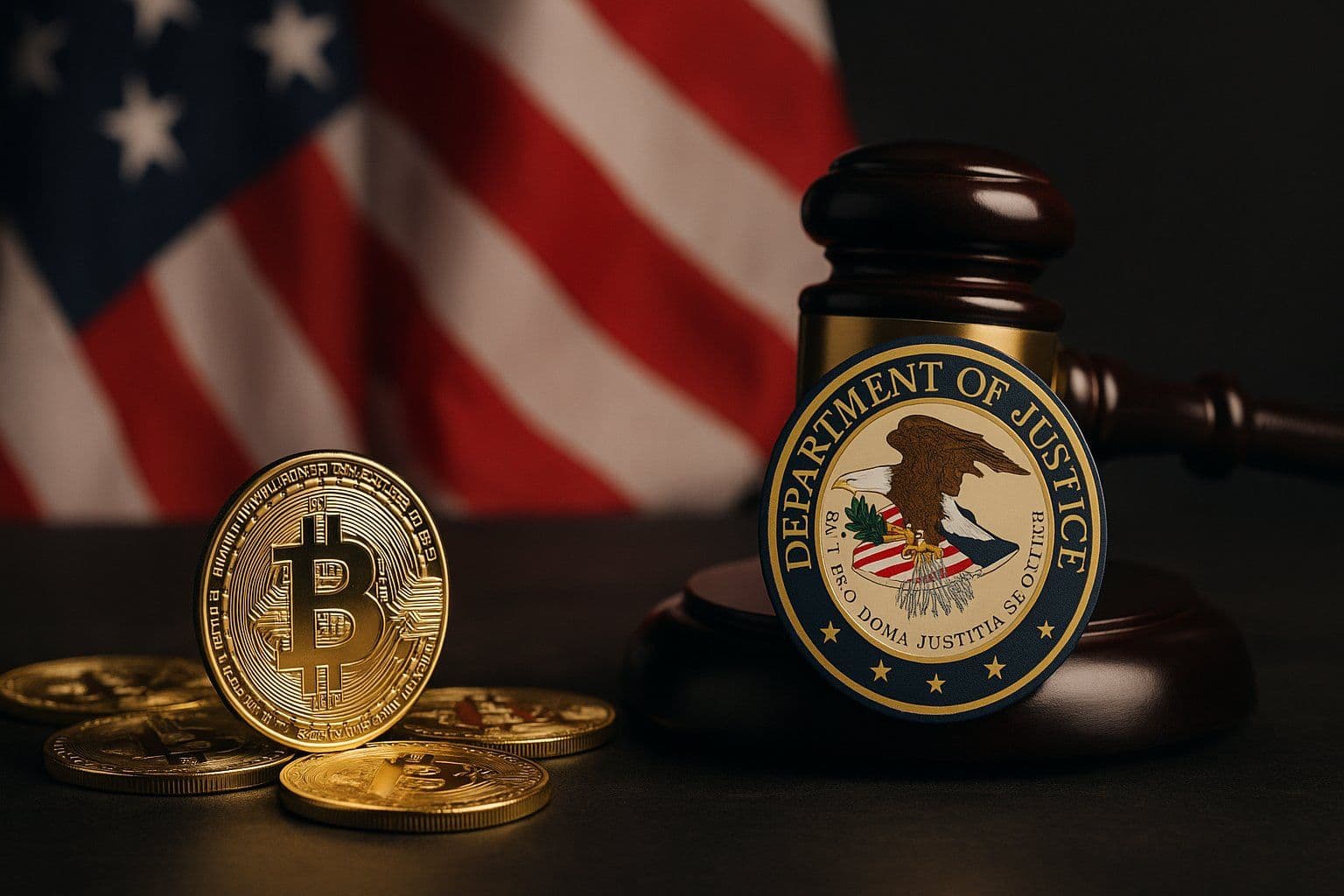
The United States Department of Justice has executed one of the largest financial seizures ever recorded, confiscating roughly $15 billion in bitcoin from an international fraud operation linked to Chinese national Chen Zhi. The criminal network was accused of running one of the world’s most sophisticated pig-butchering scams, a rapidly spreading form of romance investment fraud targeting vulnerable individuals across the globe.
The scale of the forfeiture is unprecedented. It surpasses many high-profile traditional banking scandals and signals the clearest shift yet in how aggressively U.S. authorities are willing to intervene in crypto-related crime.
Inside the scam
Pig-butchering scams work by luring victims through social media, messaging apps or dating platforms. Scammers build a false relationship over time, gradually guiding the victim into what appears to be a safe and high-yield investment platform. Once deposits reach a significant size, the platform vanishes and funds are completely inaccessible.
This method has quietly become one of the most profitable forms of financial exploitation in the digital era. Billions have been drained from individuals across the United States, Europe and Asia in just the last two years.
How investigators traced the funds
According to U.S. officials, the Chen Zhi network operated across multiple jurisdictions with thousands of coordinated fake identities and websites. The DOJ, working with blockchain analytics teams and international agencies, managed to follow the money across exchanges, private wallets and offshore crypto service providers.
The key factor in the breakthrough was not a single breach, but the transparency of blockchain activity. With enough data, coordination and legal authority, investigators mapped out the movement of funds and froze the bitcoin before it could be further fragmented or laundered.
A turning point for digital asset enforcement
This event sends a sharp message to three different groups.
- To criminals: The era of easy cross-border hiding using crypto is ending.
- To investors and the public: Governments now have the capability to strike back at scale.
- To regulators and institutions: The scale of digital fraud requires immediate policy response.
The psychological impact is likely to be larger than the market reaction itself. It proves that crypto is no longer operating in a vacuum beyond reach.
What comes next
The aftermath of this seizure is expected to set off stronger enforcement and compliance demands, including:
- Mandatory identity verification on more exchanges and OTC platforms
- Increased pressure on offshore trading venues with loose controls
- Growing expectation for AI-driven fraud detection on exchanges
- Tighter cooperation between Western and Asian regulatory bodies
Rather than slowing adoption, these moves could accelerate institutional confidence by making large-scale fraud harder to execute.
Why this could ultimately be good for crypto
Despite the disturbing nature of the crimes involved, this moment could strengthen the long-term credibility of the digital asset industry. For years, critics argued crypto was beyond the reach of law and order. This case proves the opposite. It demonstrates that blockchain transparency can empower regulators instead of undermining them.
Institutional capital, pension funds and corporate treasuries have consistently stated that legal clarity and enforcement strength are prerequisites for full-scale participation. This seizure pushes the ecosystem closer to that standard.
Crypto is entering a new era where speculation alone is not enough. Enforcement, accountability and trust are rapidly becoming core pillars of its global evolution.