
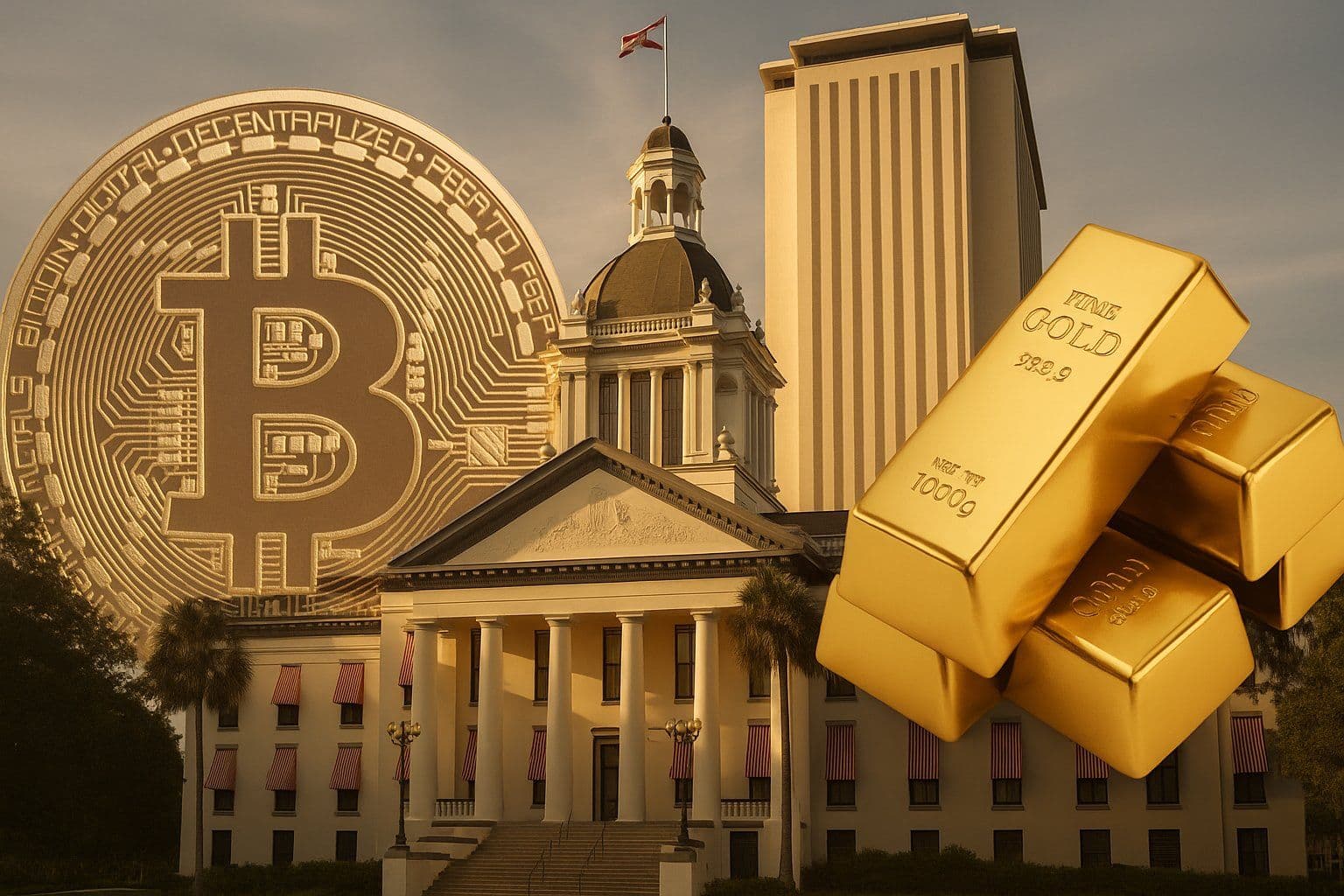
A Radical Treasury Experiment Gains Momentum
Florida lawmakers are taking an unprecedented step that could reshape how governments handle their money.
A newly reintroduced bill would allow the state to invest up to 10% of its reserve funds in Bitcoin and other regulated digital assets, a move that could make Florida the first U.S. state to officially add crypto to its treasury portfolio.
The proposal, known informally in Tallahassee as the crypto reserve bill, has ignited both enthusiasm and unease.
Supporters call it a forward-looking hedge against inflation and dollar debasement. Critics warn it could expose taxpayers to the same market chaos that regularly shakes digital-asset markets.
“This is not about chasing profits, it is about preparing for a digital economy,” said one lawmaker involved in drafting the bill. “Ignoring blockchain innovation will not make it disappear.”
A Conservative Framework for a Bold Idea
The bill’s text emphasizes risk controls.
Only regulated custodians with audited reserves could hold the state’s digital assets. The investments must remain insured, with quarterly transparency reports that detail valuation, liquidity, and counterparties.
Yield strategies that rely on leverage or derivatives are prohibited. The focus is spot exposure and short-duration, highly liquid vehicles.
In short, Florida wants to own crypto the way many treasuries own gold: securely, quietly, and within institutional rules.
“Volatility is not the enemy if you size it properly,” said a Miami-based financial adviser familiar with the legislation. “A 5 to 10 percent allocation does not make a treasury reckless. It makes it diversified.”
Why Florida, and Why Now?
Three developments explain the timing.
1. Institutional normalization
Crypto custody, accounting, and insurance infrastructure has matured. With multiple spot Bitcoin ETFs live, digital assets are increasingly viewed as alternative exposures within regulated markets.
2. Gold’s dominance
Gold’s total market capitalization has climbed to roughly 30 trillion dollars, reviving the digital gold narrative. Policymakers now see a small, rules-based Bitcoin sleeve as more defensible than it was five years ago.
3. Political positioning
Florida’s leadership wants to brand the state as a magnet for financial innovation. From Miami’s crypto initiatives to university programs, the message is consistent: Florida aims to lead.
The Skeptics Are Not Silent
Traditionalists remain unconvinced.
With Bitcoin slipping near the 105,000 dollar level this week and large blocks of leveraged positions unwinding, opponents argue that crypto is still too volatile for public funds.
“The state should not be day-trading taxpayer money,” said a former Treasury official who now advises institutional clients. “Bitcoin remains correlated with risk assets. It is not a hedge, it is a bet.”
Others warn that Florida’s move could clash with evolving federal oversight. The lack of unified public-sector accounting standards for digital holdings complicates treasury management.
The Bigger Picture: A Financial Turning Point
Regardless of how the vote lands, the bill reflects a broader shift.
For the first time, a U.S. state is publicly debating how to hold crypto, not whether it should.
If approved, Florida’s policy could set off copycat efforts in other states. Custodians, insurers, and auditors would likely respond by building compliance frameworks tailored to government clients.
“The symbolism matters,” said an analyst at a digital-asset research firm. “Even a small allocation signals that crypto is graduating from fringe asset to fiscal instrument.”
Market Crosscurrents
The legislative debate arrives as risk sentiment remains fragile.
Bitcoin and Ethereum have each dropped more than 10 percent over the past week amid heavy options expiries, while stablecoin flows suggest cautious accumulation by longer-term buyers.
Gold, meanwhile, has pushed to fresh records, widening the contrast between the oldest safe haven and the newest. Several macro strategists believe liquidity could rotate back into Bitcoin once the current selloff stabilizes.
“It is the same movie every cycle,” said a quantitative trader based in Chicago. “When fear peaks, Bitcoin bottoms, and policy signals like this can accelerate the rebound.”
Why This Matters
For decades, state treasuries relied on bonds, cash, and metals as their defensive core.
If Florida adds Bitcoin to that mix, even in small amounts, it could legitimize a new asset class inside public finance.
Whether the experiment ends in headlines or history books depends on what happens next in Tallahassee.
But the question of whether governments should hold digital assets is no longer theoretical. It is political, practical, and increasingly inevitable.