
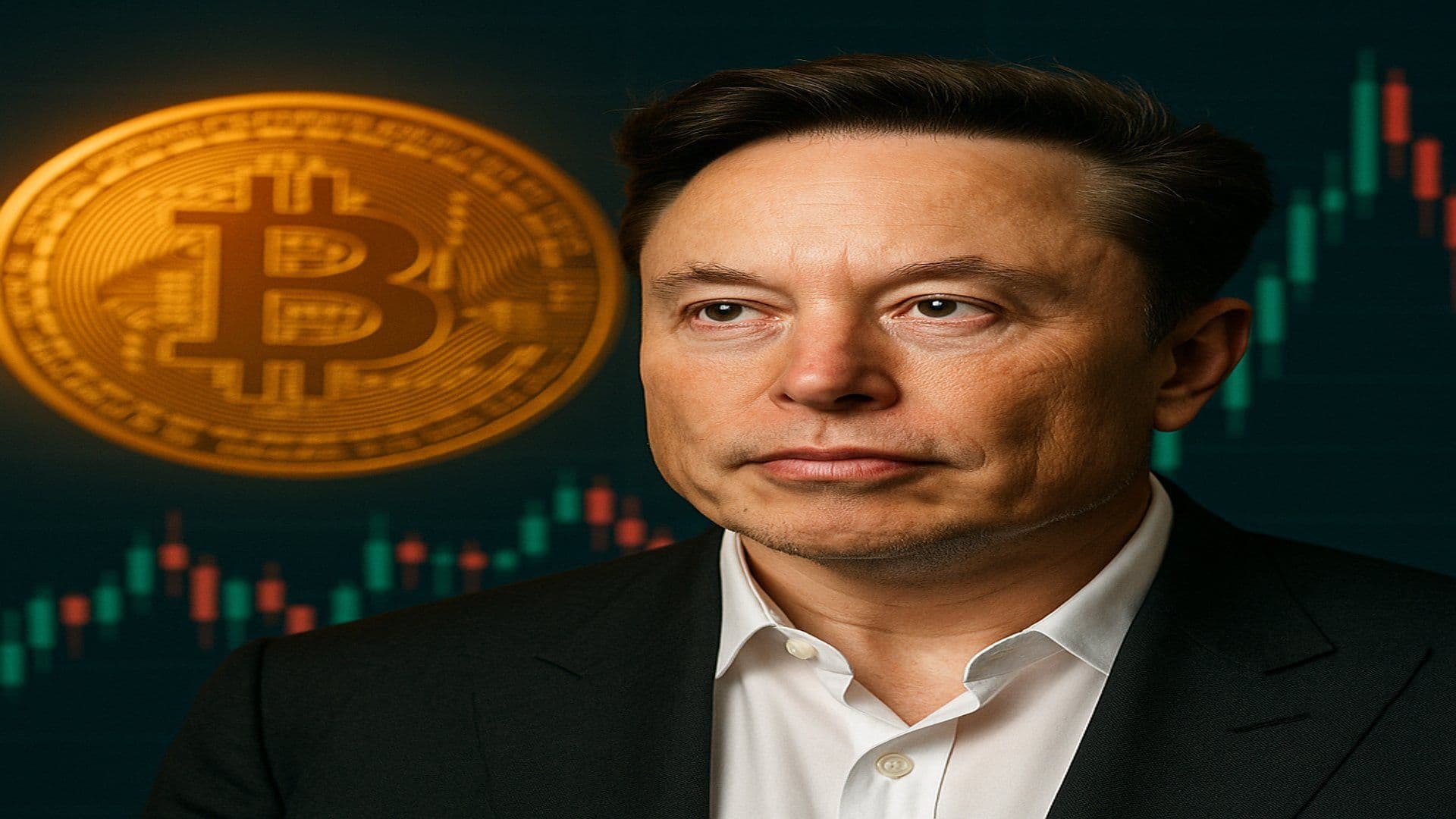
Elon Musk has reignited the Bitcoin debate by describing it as “energy money,” just as the U.S. government moved massive Bitcoin holdings across wallets. The dual shock sent markets spinning, revealing both short-term volatility and long-term conviction among institutions.
Musk’s Energy Logic Revives a Classic Bitcoin Argument
In his latest remarks, Musk argued that fiat currencies can be printed endlessly, while Bitcoin is grounded in verifiable energy expenditure. His statement reframed the asset not as a digital novelty but as value backed by work — or as he put it, “you can fake paper, but not energy.”
Analysts say this marks a philosophical shift from Musk’s earlier criticism of mining emissions. With renewable energy now powering much of the network, the Tesla and SpaceX chief appears to view Bitcoin’s proof-of-work model as an honest representation of scarcity and effort.
Market observers quickly picked up on the phrase “energy money,” which trended across social channels within hours. For many Bitcoin advocates, Musk’s renewed endorsement validated the idea that computational energy, rather than government decree, underpins real monetary strength.
You can find more market news here!
U.S. Government Bitcoin Transfers Stir Market Tension
Almost simultaneously, blockchain trackers flagged major U.S. government wallet activity involving seized Bitcoin from past criminal cases. The movement of billions worth of BTC raised speculation that authorities might be preparing asset liquidations or custody reorganizations.
The transfers briefly pressured prices, but analysts note that institutional desks viewed the event as logistical rather than bearish. Some compared it to central-bank gold movements — unsettling in the moment, yet proof that Bitcoin has matured into a state-level asset class.
Despite intraday swings, long-term holders showed little panic, while derivative traders used the volatility to recalibrate positions.
Institutional Appetite and Treasury Strategies Strengthen
Even as markets wobble, institutional engagement continues to rise. Major asset managers, hedge funds, and corporate treasuries are expanding Bitcoin exposure through regulated ETFs and custodial trusts.
A senior strategist at a London investment firm called Bitcoin “the most efficient collateral of the digital age,” noting that its global liquidity and finite supply make it attractive in times of monetary uncertainty.
This view echoes a broader trend: companies treating Bitcoin less as a speculative token and more as strategic treasury infrastructure — one that complements gold and short-term bonds rather than replacing them.
Bitcoin DeFi (BTCFi) Gains Traction
While Bitcoin’s price headlines dominate, its integration into decentralized finance is rapidly advancing. Through bridging solutions and wrapped BTC, holders can lend, borrow, and earn yield without leaving the Bitcoin ecosystem.
Projects focused on “BTCFi” now attract billions in total value locked, signaling that Bitcoin’s utility is expanding beyond simple storage of value. Developers argue that this represents a new era where Bitcoin’s unmatched security becomes the foundation for programmable finance.
If successful, it could redefine Bitcoin’s role from a passive investment to an active participant in global liquidity markets.
Market Mood: Volatile but Optimistic
Despite the turbulence, social sentiment around Bitcoin remains overwhelmingly positive. Influential traders describe the current consolidation as a “reset before the next leg higher.” Whale activity has intensified, but so has retail interest — particularly among investors using ETFs as entry points.
Musk’s renewed attention, combined with visible government engagement and growing DeFi use cases, has reignited conversation around Bitcoin’s long-term legitimacy. The narrative now blends technology, regulation, and philosophy — a rare convergence even in crypto’s volatile history.
What to Watch Next
- Further U.S. government wallet activity: Any confirmed sales could cause temporary market ripples.
- Institutional filings and ETF inflows: Sustained capital migration into Bitcoin vehicles will confirm renewed trust.
- BTCFi growth metrics: Expansion of cross-chain liquidity and wrapped-BTC volume may become key valuation drivers.
- Energy-efficiency data: Rising renewable usage will strengthen Musk’s “energy money” argument.
- Macro catalysts: Inflation data, dollar strength, and equity correlations will continue shaping Bitcoin’s near-term path.
Bitcoin’s story now stretches far beyond its chart. It is a tale of philosophical endorsement, regulatory realism, and evolving financial architecture. Musk’s simple phrase — “energy money” — may prove prophetic, describing not only what powers Bitcoin today, but what sustains its relevance in the decades ahead.
Track live Bitcoin prices and sentiment on our Markets page.