
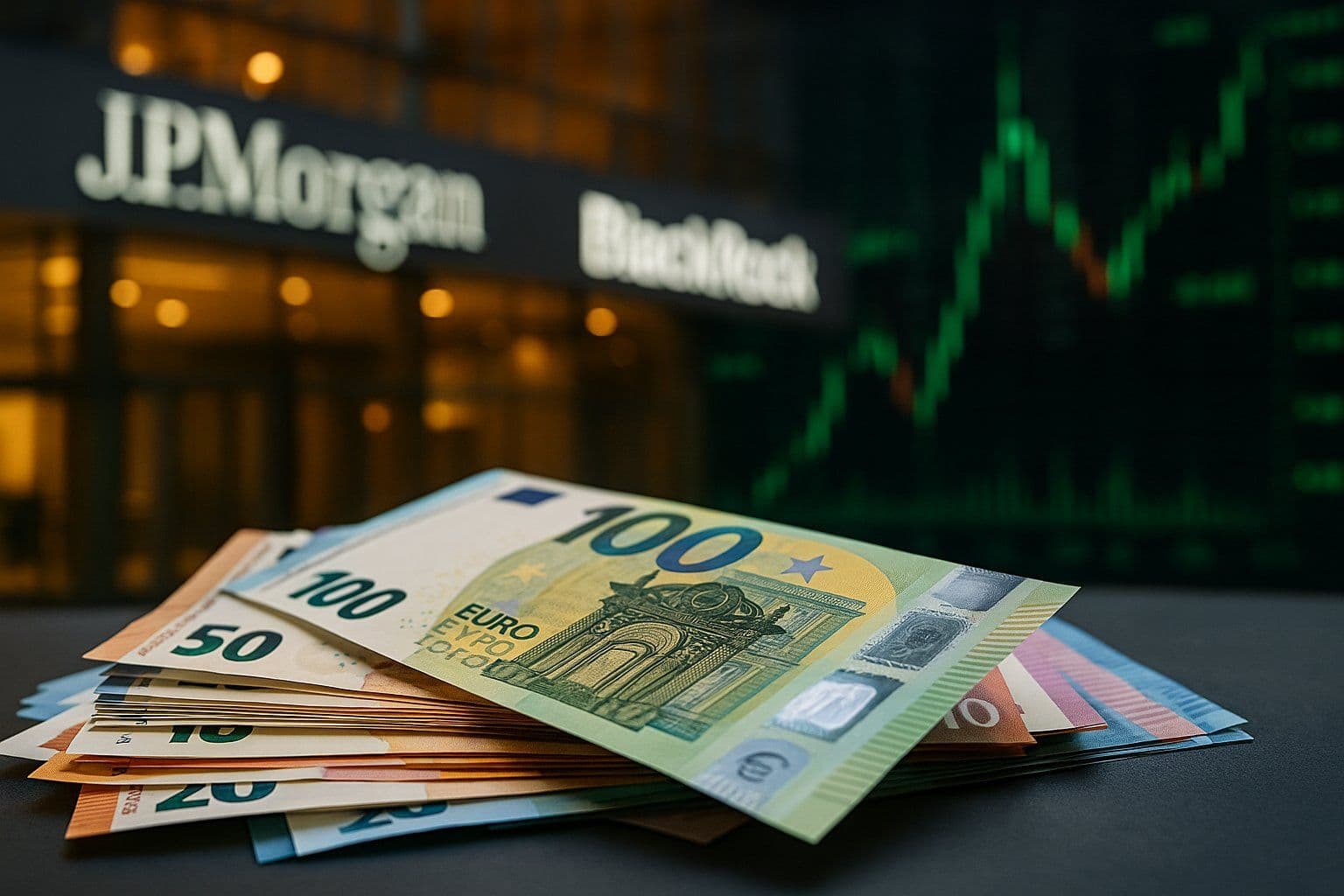
The Most Important Transformation in Finance Is Happening in Silence
A historic shift is underway inside capital markets. Real-world assets such as U.S. Treasuries, private credit, money market funds and cross-border settlement flows are being moved onto public blockchain infrastructure by regulated institutions. This is not the same hype-driven DeFi of 2021. This is the beginning of fully compliant, yield-bearing financial products operating entirely on chain.
Traditional finance has one objective above all others: efficiency with auditability. Tokenized finance offers instantaneous global settlement, lower counterparty risk, transparent collateral and programmable compliance. That is why global asset managers, sovereign wealth funds and clearing institutions are executing real pilot transactions today — not theoretical research.
BlackRock, JPMorgan and Global Banks Lead the Quiet Phase Shift
BlackRock is already running tokenized treasuries on Ethereum. JPMorgan has used its Onyx platform to settle both tokenized collateral and interbank payments between global currency networks. Multiple European investment banks now issue tokenized bonds directly to regulated digital wallets without touching legacy clearing pathways.
This is not a test environment. These are production-level trials with real capital and compliance frameworks in place. Officials inside the Bank for International Settlements have gone on record stating that tokenization is a foundational unlock for the next era of financial infrastructure.
Why the World Is Moving Toward Tokenized Dollars and Credit
Settlement speed is one factor. A U.S. Treasury trade that normally takes two business days to clear can finalize in under 10 seconds on chain with cryptographic proof. But speed is just the beginning.
Tokenization introduces programmable capital — money that can enforce rules by itself.
That means automatic collateral release the moment conditions are met, custodial enforcement that cannot be tampered with and the ability to trade assets globally without fragmentation between legal jurisdictions. This is why asset managers and banks are not waiting for retail sentiment to return. They are already preparing the rails.
Stablecoins Signal Real Demand, Not Speculation
The first clear sign of real world liquidity moving on chain is stablecoins. These are not speculative assets. They are cash equivalents. Their growth is directly tied to demand for on chain settlement and institutional financing activity.
Solana’s stablecoin supply has expanded from 5 billion dollars to around 17 billion dollars in less than nine months. Ethereum remains the base layer for tokenized treasury products. Layer 2 networks across Ethereum are now competing to win regulated settlement contracts from banks and fintech firms. None of this is driven by retail hype. It is driven by real global payment traffic.
Private Credit Is the Next Major Wave
Private credit markets — one of the fastest growing segments in global finance — are now being tokenized at scale. Projects backed by major U.S. financial institutions are issuing tokenized credit facilities with real yield. These are not crypto-native lending pools. These are real-world loans with legal enforceability and regulated yield distribution.
In past cycles, high yield strategies were dominated by offshore and unregulated platforms. That era is ending. Institutions are bringing the same product category on chain but with full compliance, transparent reporting and distributed liquidity across networks.
The Impact for Investors
Tokenized finance does not eliminate banks. It upgrades their architecture. In the next two years, investors will begin allocating into tokenized money market products, tokenized treasuries and tokenized credit via interfaces nearly identical to traditional brokerage platforms. The difference is settlement time, transparency and global liquidity access.
For crypto native traders, this is a critical turning point. The opportunity is no longer just trading volatility. It is front-running the movement of real institutional liquidity into chains that enable compliant settlement at scale. This is not a meme cycle. It is financial infrastructure migration.
What to Watch Now
Institutional volume on tokenized Treasury platforms: If daily issuance begins to exceed traditional settlement windows, the migration has passed the point of no return.
Bank backed stablecoin programs: Commercial banks issuing their own tokenized dollars would lock traditional finance directly to blockchain rails.
Regulated credit protocols with real underwriting: The moment major private credit firms begin actively moving capital on chain, every asset manager will follow.
Custodian adoption: When State Street and BNY Mellon begin to custody tokenized assets as defaults, the transformation becomes irreversible.
The Shift Has Already Begun
The migration of real-world assets onto blockchain rails is not a future prediction. It is already underway. It is not being pushed by influencers or retail speculation. It is being driven by the core of the financial system itself.
The narrative will change faster than most expect. The next globally dominant crypto assets will not be the loudest. They will be the ones chosen by regulated capital to carry trillions in real economic value.