
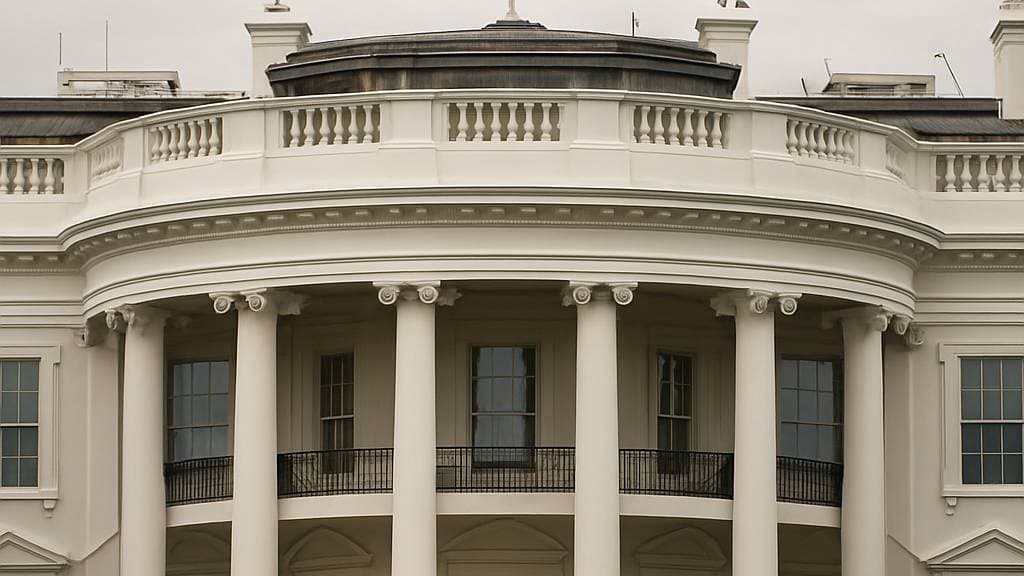
A Shift From Observation to Orchestration
For much of the past decade, the U.S. government approached cryptocurrency as a curiosity — something to monitor, not embrace. That stance has changed dramatically.
Over the last nine months, the White House has moved from passive oversight to active coordination, signaling that digital assets are now a national-interest issue, not just a financial fad.
Behind the change is a broad policy agenda that merges innovation, regulation, and geopolitics. It’s a shift from “regulation by enforcement” toward governance by design — with the executive branch, Treasury, and Congress all advancing frameworks that could make the United States the global center of compliant crypto finance.
The Executive Order That Redrew the Map
Earlier this year, the administration issued an updated Digital Asset Executive Order, directing every major federal agency to align on a single national strategy for blockchain, stablecoins, and decentralized finance.
The order set in motion the White House Digital Asset Working Group, a body spanning the Treasury, SEC, CFTC, Commerce Department, and National Security Council.
Its mandate: create actionable policy, not just research papers.
By mid-summer, that group delivered a 160-page framework that quietly changed Washington’s tone. Instead of debating whether crypto should exist, it asked how the U.S. can lead its responsible use.
The framework outlined goals around stablecoin safety, cross-border payments, and innovation incentives for U.S.-based developers.
“The United States intends to remain the global standard-setter for trustworthy digital assets,” the report declared — a line that reads more like a strategy statement than a cautionary note.
Like article like this? Find more related articles in blockchain here!
Stablecoins Enter the Law Books
The biggest concrete outcome came in July when the president signed the GENIUS Act, the country’s first comprehensive stablecoin law.
It defines how dollar-pegged tokens can operate, who can issue them, and what reserves they must hold.
For banks, fintechs, and blockchain issuers, this clarity ends a decade of uncertainty. Stablecoins are now regulated instruments, not gray-zone experiments.
The law requires full transparency of reserves, state-federal coordination, and a ban on misleading marketing that implies government backing.
In practical terms, it means that regulated stablecoins can now be integrated into payment networks, payroll systems, and merchant platforms with less legal risk — a long-awaited green light for traditional finance.
For the White House, it’s a political win: proof that crypto policy can balance consumer protection and innovation in the same breath.
The Strategic Bitcoin Reserve
Another initiative drew even more intrigue.
In March, the administration quietly approved the creation of a Strategic Bitcoin Reserve, a custodial program under the Treasury’s Office of Financial Assets.
The Reserve isn’t a speculative purchase; it consolidates Bitcoin and other digital assets seized in enforcement cases into a single transparent structure with audited oversight.
Still, the symbolism is powerful.
It means the U.S. government now holds and manages Bitcoin at the federal level — not as an investment, but as a strategic resource.
Officials describe it as a modernization of asset management, but analysts see deeper implications: a potential blueprint for how nations may treat digital assets like commodities or strategic reserves in the future.
If the Treasury begins publishing periodic disclosures or explores lending and collateralization of these holdings, it could reshape how sovereign states interact with crypto markets.
Find latest Bitcoin prices in our markets page!
The Political Calculus Behind the Pivot
The administration’s new tone isn’t ideological — it’s pragmatic.
With Europe advancing MiCA, and Asia accelerating CBDC and stablecoin integrations, U.S. policymakers recognized that hesitation equals loss of influence.
By defining the rules, Washington keeps both the dollar and U.S. financial infrastructure at the heart of global digital value exchange.
It also serves domestic interests.
By bringing stablecoins under U.S. banking law, regulators gain visibility over billions in daily transactions that were previously opaque.
By centralizing seized crypto under the Strategic Bitcoin Reserve, they ensure those assets can’t quietly vanish into black markets or offshore wallets.
It’s control, efficiency, and legitimacy — all at once.
Regulation as Infrastructure
Unlike past approaches where regulators reacted to scandals, the current roadmap aims to build proactive systems:
- A national database for crypto-related illicit-finance monitoring.
- Coordinated supervision of bank-issued stablecoins.
- Sandbox programs for blockchain startups under Treasury oversight.
- Real-time proof-of-reserve reporting standards for custodians and exchanges.
This infrastructure-first mindset echoes how the internet itself was standardized in the 1990s — messy, then structured, then inevitable.
Connecting the Dots: The U.S. Strategy Triangle
When viewed together, three moves define the White House’s new crypto posture:
- Strategic Coordination – through executive orders and interagency alignment.
- Legal Clarity – via the GENIUS Act and forthcoming market-structure rules.
- Sovereign Custody – through the Strategic Bitcoin Reserve.
The message: Washington no longer sees crypto as a regulatory nuisance but as a domain of national competitiveness.
For global markets, this triangulation could make the U.S. the most important jurisdiction for compliant stablecoins and institutional adoption.
For retail users, it may mark the first time the federal government acknowledges digital assets as legitimate tools of commerce — not threats to stability.
Speculative Look Ahead: From Reserve to Policy Lever
If the Strategic Bitcoin Reserve gains formal reporting status, it could evolve into a macroeconomic instrument.
Treasury could manage supply from seized holdings strategically — auctioning coins in stable markets, or even using them as collateral in cross-border settlements.
Meanwhile, talk around tokenized Treasury bonds and government-backed stablecoins is accelerating.
Some insiders speculate that within two years, U.S.-regulated stablecoins could integrate directly with FedNow or central bank APIs, effectively creating a hybrid model between stablecoin liquidity and state-level settlement rails.
That would place the United States far ahead of most countries in bridging fiat and crypto economies.
What to Watch
- Implementation of the stablecoin framework and its reserve-reporting rules.
- Treasury’s first disclosure from the Strategic Bitcoin Reserve.
- Congressional momentum on broader market-structure legislation.
- U.S.–EU coordination under MiCA equivalence frameworks.
- Early signs of Fed-linked stablecoin integrations through regulated banks.
When the White House Turns to Crypto
- The administration is aligning agencies through a national digital-asset strategy.
- The new stablecoin law gives legitimacy to U.S.-regulated tokens.
- A Strategic Bitcoin Reserve brings crypto under sovereign management.
- Policy is shifting from defensive to architectural — crypto as infrastructure.
- The United States is moving from watcher to architect of the digital-asset era.